We got up Friday morning before the crack of dawn to get on the road up to New Jersey. We were on our way to West Orange to Edison National Park. The drive was supposed to take a bit over 3 hours but there was a bad wreck that closed the Turnpike so it ended up taking close to 5 hours to get there. No matter, though, the museum director at Gettysburg had graciously asked the curator at Edison to host us in our visit. We met with her when we got there and she gave us some information on the enormity of the collection there and we talked a little about getting everything catalogued into
ANCS and her staff and progress. Since we'd never been there, we then were off to explore the Laboratory unit of the Park. Here's Mark listening to the audio tour at the entry of the laboratory building. The door to the right of him is the door to the library shown next. The time clock to Mark's left had hands painted on at the time of the last time that Edison left the lab after he lay in repose after his death.

This is the library of the invention building. The Edison company had a huge complex of factories attached to this complex that were not under the National Park service, some were still standing (and very impressive) and some were torn down in the 1960's. Edison and his inventors used this library to think and draw up proposals, patents and plans. It has a projection booth right near the eagle, and little
cubbies for the other inventors' desks, as well as a bed between the stacks on the first floor for Edison to take naps. Edison routinely worked 80 and more hours per week. The woodworking in the room was incredibly beautiful and as you can see, the engravings and pictures hanging were numerous and interesting. One of the hanging documents was the first ever academy award that went to Edison for inventing the motion picture. Amazing.

I had a hard time taking pictures here since the light coming in to the windows was so strong. This shows the large clock that was actually carved into the woodwork. Edison's large desk was right in front of it. The room was lit with the
light bulbs you'd think of because of Edison's inventing them, it was an amazing room.

This statue which sat in the library was from the World's Fair (then called an Exposition) in Paris. He had a lot of exhibits and presentations there, and this showcased the
light bulbs that were introduced by Edison in the 1890's. The original bulb actually burned out and had to be replaced (popular culture says it's still burning but it is not), but it took 75 years of use to do so. The statue was of beautiful white marble, and everything was wired with copper wires. All of the lighting fixtures were beautiful.

As we left the library we went past the storeroom of supplies for the inventors. It was caged off because it was a pass through to the machine shop part of the building, the fencing is original to the building. Everything was as Edison left it when he died. The storeroom had all kinds of interesting things in it, anything that an inventor might think he needed when trying out an idea. They lived in the era of all natural materials, and there were tusks, hooves, a tortoise shell, wool, metals, woods, anything you could imagine. Just looking at the sheer number of items here was nearly overwhelming.

This is another shot of the inventor's storeroom, just one of many areas that were truly amazing. The family gave the
laboratory and buildings to the Park service early on so things were as they were left by people working there, including Edison. You'll see more of what I mean as we go through the buildings.

This is the machine shop. The machines are run by leather belts that come from pulleys in the ceilings. There were all kinds of machines for making and shaping and working with metals and other materials here. The desk in the foreground helped keep track of projects being worked on, all of the ledgers and records helped to figure out the cost of each invention and each manufactured good. The laboratory building employed sometimes 100 people at a time, and the factories next door employed many more. Women were also employed to help in the work.

More shots of the shop areas.

The leather belts are shown running on the ceiling via large pulleys from the big motors on the floor. There were no safety guards or anything of the sort, if you lost a limb or got hurt on the rapidly moving belts or machinery, it was because you weren't careful and you were on your own for medical care. The only thing the companies of that era were supposed to do for you if you died as the result of an accident was to give your tools to your spouse or next of kin.

Edison had a full time photography lab as well as photographers and many pictures from when the lab was operational were taken and have been preserved. This shot shows that the machine shop looks exactly the same as when it was operational, in fact, it looks like the workers are simply out on break, there are tools laying on the desks, and some items that were being worked on laying out just as they were.

On the third floor of the laboratory building is the recording studio (we didn't get any pictures, unfortunately) where Edison decided which music to record first on wax cylinders and then on records. The pianist played sheet music all day and when he heard something that he liked he would get musicians in to record it. We were delighted to get to listen to one of the original wax cylinders on an original Edison phonograph, the sound was vivid and crisp. The equipment to record was still there, as well as an extensive collection of
victrolas, cones, and phonographs. The storage on this floor outside of the recording studio is in cabinets with glass panels, and also you can see into a fenced area where everything is on open shelves.

A look into the storage area in the Laboratory building. The array of items was incredible, just the phonograph collection housed a major part of the storage area.

More storage. There are 400,000 artifacts catalogued in the collection at Edison, including his home items. In addition there are 5,000,000 documents, including a vault in which are housed musical recordings, 50,000+ photographs (some are glass plate negatives) and laboratory paperwork, notebooks, and other paper documents. When they were cataloguing the enormous volume of materials, they found inventions that were previously unknown. They actually have a "
marginist" who went through the books and notebooks looking for notes in the margins. The curatorial staff has 8 full time people as well as interns and seasonal employees to continue the work.

This plaque from the storage area up in the laboratory building mentions the numbers from the collection. I thought the Collection at Gettysburg and amount of work involved in cataloging and keeping up with it all was large until I saw this one, it's one of the largest in the Park Service.

This is the outside of the laboratory building. The factories are built to match, they're on the other side of the lab building. That's mark looking up at the building. There are other buildings on the property that are part of the park.

Here's the woodworking shop across from the lab complete with some of the items they were working on when the laboratory closed at Edison's death. There is also a
Blacksmithing shop, and the "Black Maria" is the first Motion Picture Studio, it's right next to the entrance. They give tours with Rangers of that, but we had our tickets to go on the tour of Edison's home so we got underway to that nearby site.

In the woodworking shop, right by the door were blades and tools just as they were left, and we were looking at all the catalogue numbers upon each item. We have a great appreciation for the work that goes on in the curatorial side of the parks.
One of the buildings from the original site (called #11) was even shipped to the Henry Ford museum in
Dearborn, MI because the
Menlo Park buildings where Edison invented the
Lightbulb are displayed there. It wasn't needed anymore so it was sent back to West Orange, NJ...it's the most traveled building in the National Park Service. I'm pretty sure that building was the blacksmith shop.

Our next stop was the
Glenmont Estate, the home and lands that Edison bought for his wife, Mina. The local garden club keep up the grounds and the greenhouse and potting shed. Mina loved plants and birdwatching, and this area, called,
Llewellin Park, is an oasis in the hustle bustle of life in West Orange. The greenhouse is shown to the left of the garden out front. This is the sight that greets you at the parking area.

Another shot of the beautiful gardens on this wooded estate. Mark got a lot of pictures of the home and furnishings, nearly as Mina left them when she passed away. Edison's cars are even in the garage, though we didn't get any pictures of them...Mina and Thomas are buried on the property too.

Remember this is New Jersey, but it was 110 in this room of the greenhouse, hot enough for those desert plants to thrive. There was a room devoted to orchids and other plants that love a little bit cooler temperature, and there were citrus plants in another room.

This is a healthy looking jade tree...everything in the greenhouse was labeled and dated and it looked like the garden club lovingly cared for everything.

This late Victorian Home was red brick on the outside, and though beautiful, was not nearly as beautiful as the interior entry hall. It was sold to Edison completely furnished at a price of $250,000, which is about 4.5 million dollars in today's money. They did very well and probably got quite a bargain even by yesterdays' standards.

Each
hand carved rosette in the staircase is different, this was the place to impress your callers. The stained glass panel is in a later photograph.

This the entry room for receiving guests. Edison did not hunt, but received various animal rugs and other items as gifts from callers and friends. The stairway and hallway were carved Mahogany and Oak, quite impressive and beautiful.

The library just as the former owner left it. The guy that built this house was caught embezzling funds and told to either leave the country with the clothes on his back or go to jail. This was his office and library, Edison left it just as it had been and never used the room.

This was another sitting room, the family and guests used this one.

This sun room was added to the house by Edison for Mina. She loved to bird watch and enjoy the beautiful plants. It was used quite a bit by the family.
This is the sitting room. There are several pianos in the home, Mina played very well, in fact, she was playing the piano at a to-do in Florida that Edison was attending, that is how they met. Thomas Edison was nearly deaf in his later years, he played poorly.


The portrait on the wall in the entry room was of Charles Edison, one of Thomas and Mina's children. He became Governor of New Jersey in his later years. He didn't have children, only one of the children did, so the Edison name died out with him. There are great grand children surviving, but they carry their grandmother's married name.

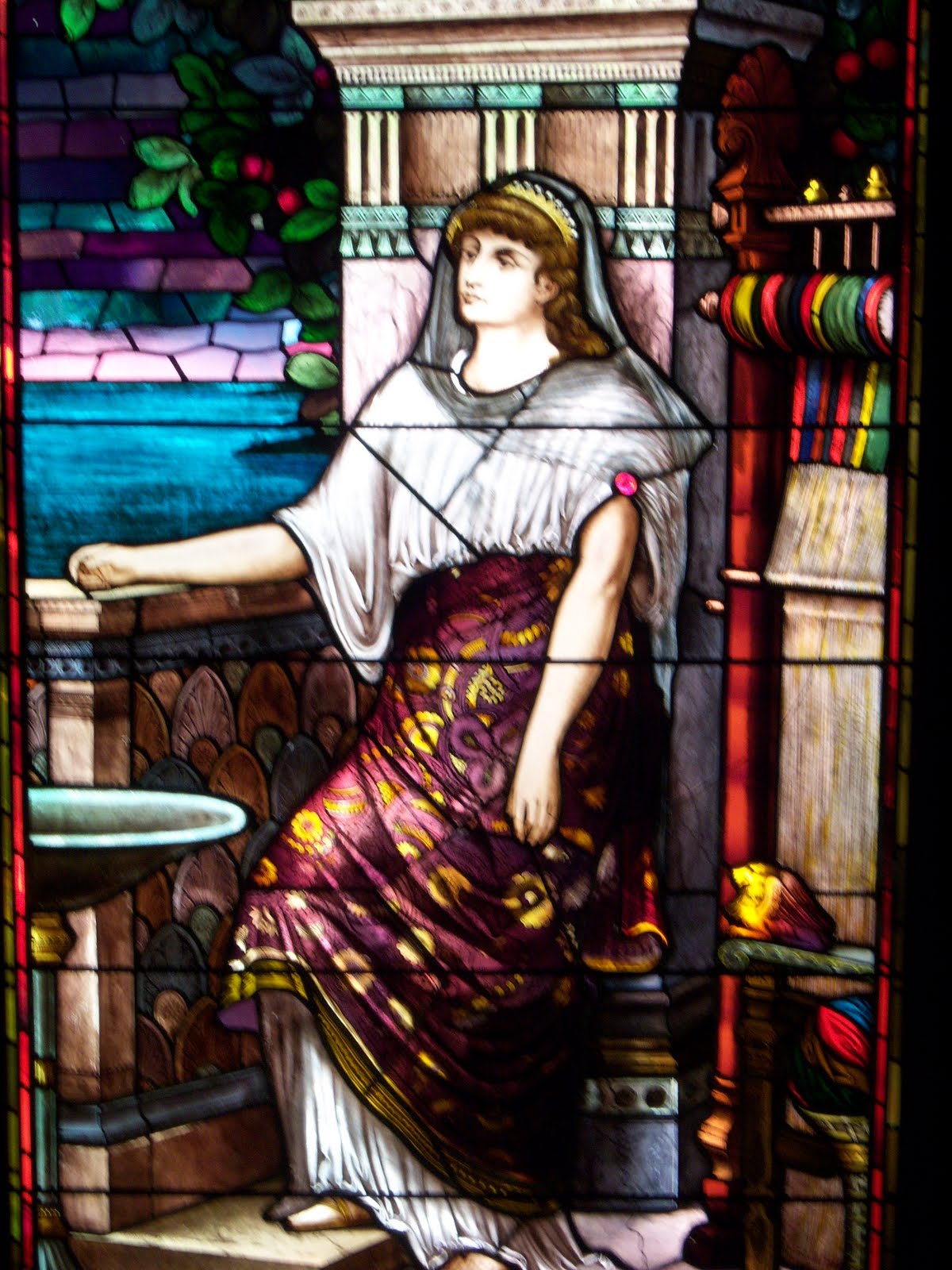
These beautiful stained glass panels are in the servant's end of the home. The Edisons employed many servants and the women servants lived up on the third floor of the home while the men lived in some of the other buildings on the property.

The dining room. This table intrigued me. It's set for 6 here, but it has 9 leaves and opens out to a large enough table to fill the entire room. Mina entertained but Thomas did not like socializing very much.

One of two tiffany lamps in the home. Mina actually wrote most of the script that the guides to the house use to take visitors through. She gave the home as it's seen to the park service upon her death in the late 1940's.

A projector for watching movies in the men's sitting room.

Back to the servant's part of the house, this is the laundry room, with laundry hanging just as it would be in the winter time. They had an area outdoors called the "laundry yard" where the clothing would be dried in the nicer weather.

There were three wash sinks in the laundry but no washing machine.

Here are the washing sinks.

I had to smile when I saw that their kitchen was painted, including trim, in the same colors that I'd done my own in this early spring. This is a shot of the kitchen.

This bedroom belonged to one of the children.

Detail of the beautiful stained glass panel in the entry hall of the house. I don't recall if it was installed by the Edisons or in the house prior to them buying it.

This is the upstairs family room. It is between the bedrooms on the second floor and is where Edison used to escape to when they had company to continue his thinking and his work of inventing.

The guest room upstairs. Henry Firestone was a frequent visitor, he and Thomas Edison were good friends.

Another beautiful stained glass panel in the home.

This picture hangs on the wall in the Men's sitting room. Both Thomas and Mina Edison were from Ohio, and as you can probably see, this picture is of Robert E Lee. We just had to get a picture of that.

A Shot of the home from the site of the graves in the back yard.
Our next stop was in nearby Morristown, New Jersey. This National Park was in commemeration of the winter that George Washington encamped his troops to spend the winter.

This is his headquarters building in the town of Morristown. The home in which he stayed is right behind where I'm standing to take the picture, unfortunately the home is under renovation and not open to the public. The home contains original furnishings and artifacts, but the headquarters has several displays of artifacts from the encampment and era, including a collection of paper documents (pamphlets, booklets, and other documents) dating from pre-revolution on up through the 1800's.

Washington learned quite a bit from his hard winter in Valley Forge, PA. He had the men build wooden huts that drained downhill and were built into the hills in the area. The winter of 1780 was the worst winter ever remembered and there was 4-6 feet of snow on the ground at times. He wanted to be close enough to Manhattan Island, where the British were camped to keep them from attacking but far enough away to rest and restock his troops. The huts housed men on three sides and had a stone wall built on the other side for a fireplace. We saw where the Maryland Line was housed as well as the other state Militias. They spent a hard and hungry winter there. The Visitors center there had a replica and there was a driving tour of the sites as well as some huts outdoors for us to tour.
After grabbing a quick bite to eat, we were on our way home. The weather was hot and we were tired and it took many hours caught in traffic to make it home. We enjoyed our day, and we'd definitely go back especially to Edison NP. Oh, and did I mention that we got 5 new stamps in our National Park Passports?
 The latest nightmare, oops, I mean house project was to take the wall paper off the walls in my office. It was starting to come off the wall and looking a bit shabby so it needed to come down. Problem was, the people that owned the house had put wallpaper on the bottom of the wall and it was so very difficult to get off, besides the valuted ceilings being so darn high that it made it difficult to get it all down. I had to do a wall at a time so that I could move the furniture off the wall, strip, paint, and then replace the furniture. I ended up completely changing around the whole room and doing a lot of cleaning.
 I had to stack my yarn stash drawers...but to the left of the drawer units is where the two colors I painted come together. The colors are pretty close so you can't really see the difference. I painted two walls with the darker and two with the lighter to try to do somewhat of a highlight.
 What a totaly nightmare it was to move my desk. I had to take it all apart and I still have bins and bins of things to go through . It was worth it, though, I love the desk being over near the light of the window and now I can see what's going on out the door to the room and down the hall.
 I had tons of photographs from the shelf on the stairway that ended up on shelves on the walls in the office. I staggered them so that the highest shelf was closer to where the cats can get on the high dresser. Belle is crazy and jumps onto things so I have to keep that in mind when I plan where to put things.
  I made some half curtains to go over the window in front of the printer to keep a bit of the sunlight out of the room. It gets really hot in the mornings. The fabric was from my stash and I am pretty sure it was left over from Jenn's grandmother's home when she passed away. Sammy is sleeping on top of the printer. He looks so very uncomfortable but he still sleeps up there.